GAME DESIGN
My game design work from every project, favorites first.
GAME DESIGN

GAME DESIGN
When I started working at Tobafeu Studio, a small version of the game was already playable, so I had to draw inspiration from what existed to help define what Royal Vermin would ultimately become.
It all began with a one-pager that aligned the entire team around the game's core pillars and clarified what we needed to prioritize moving forward.
Then I explored ideas that could make the game more fun. Here's the main three I found.
The Death Throw Mechanic
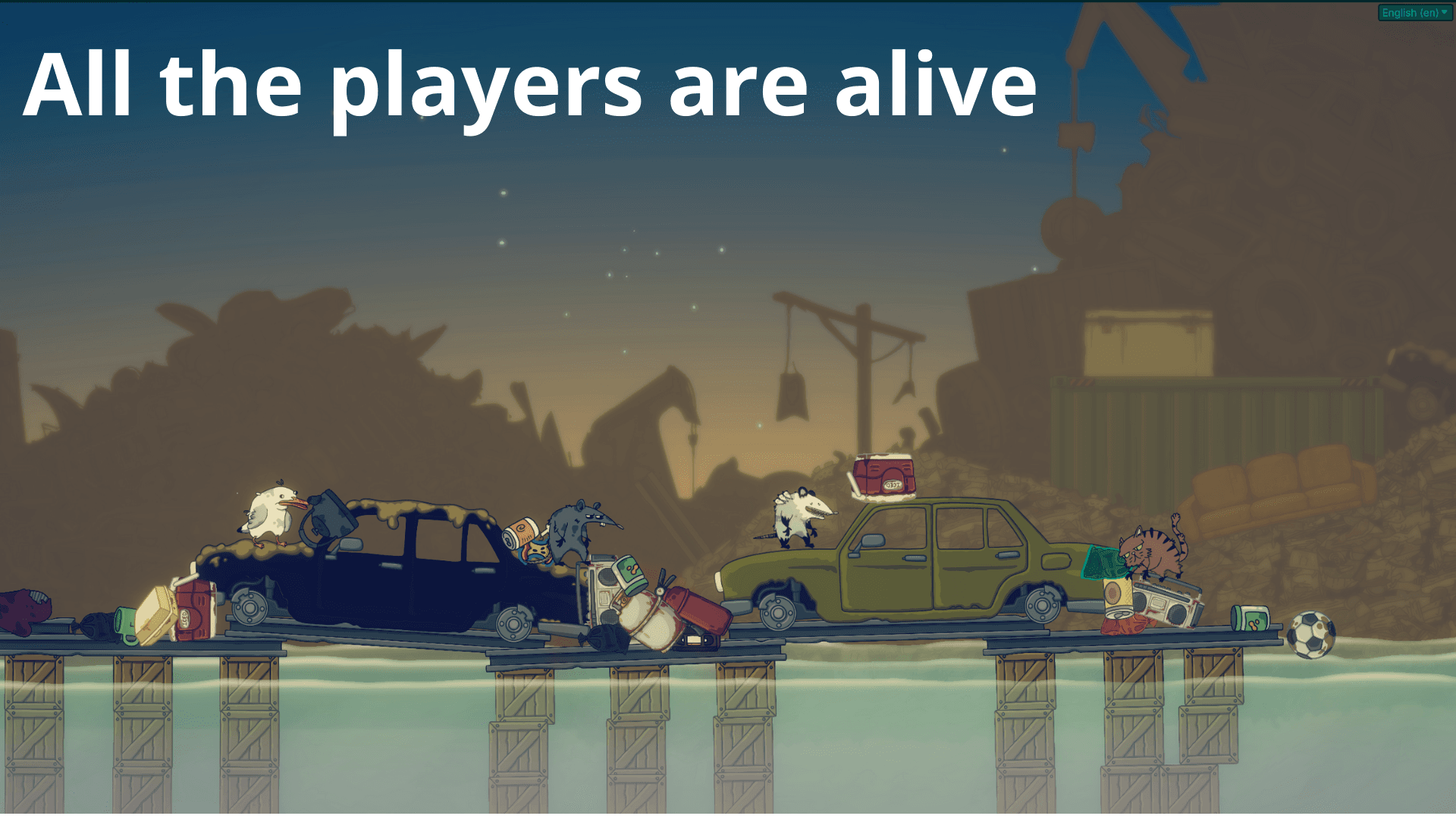
The first thing we realized about competitors like Super Smash Bros. or Ultimate Chicken Horse is that when you lose and the round isn't over, there isn't much to do. We understood that losing shouldn't be rewarding if we want to maintain a certain level of competition between players, but it should at least be fun.
So I created the Death Throw mechanic. Here's how it works, when a player dies, his characters goes in the foreground of the level and starts throwing trash at the surviving players. The loser's can then influence the fate of this round or simply destroy the level for everyone, mouahahaha!
Explanation of Death Throw
The Mini Game Mechanic
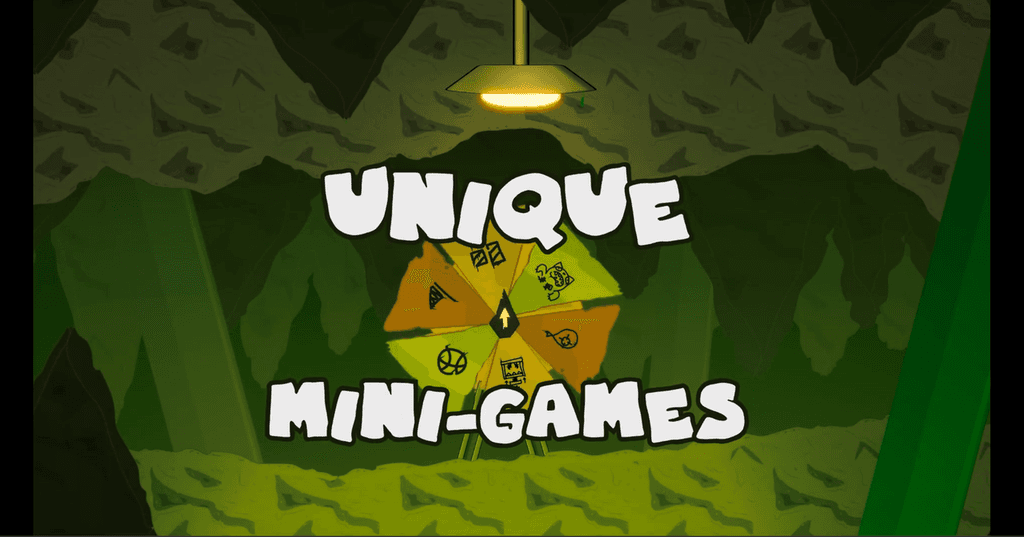
We wanted every match to feel unpredictable and different. How can a party game stay fun if we already know how each game is going to unfold?
Here's the solution! After a few rounds, players are presented with a spinning wheel. Each section represents a different mini-game: basketball, target shooting, a gauntlet of falling containers, and more! This adds strong gameplay variety and also improves the pacing of each match which keeps players constantly engaged.
After the mini-game, it's time to roll the dice! One lucky throw can earn multiple points and completely shake up the match. With the right roll, even the player in last place can snatch victory.
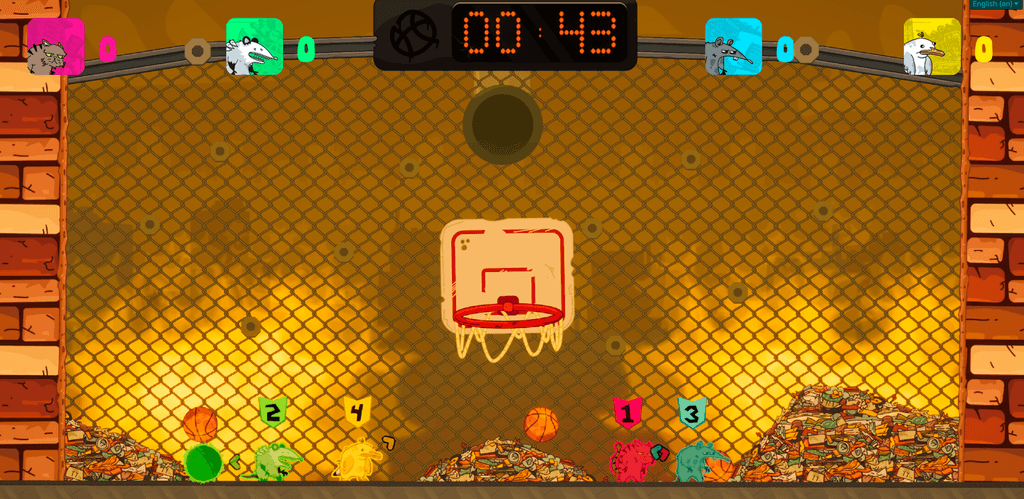
Basketball
The Rule of 3
I really wanted the game to feel constantly creative and chaotic. I didn't want one idea to overstay its welcome while another was underutilized. So, I designed the levels around a simple principle: the Rule of Three.
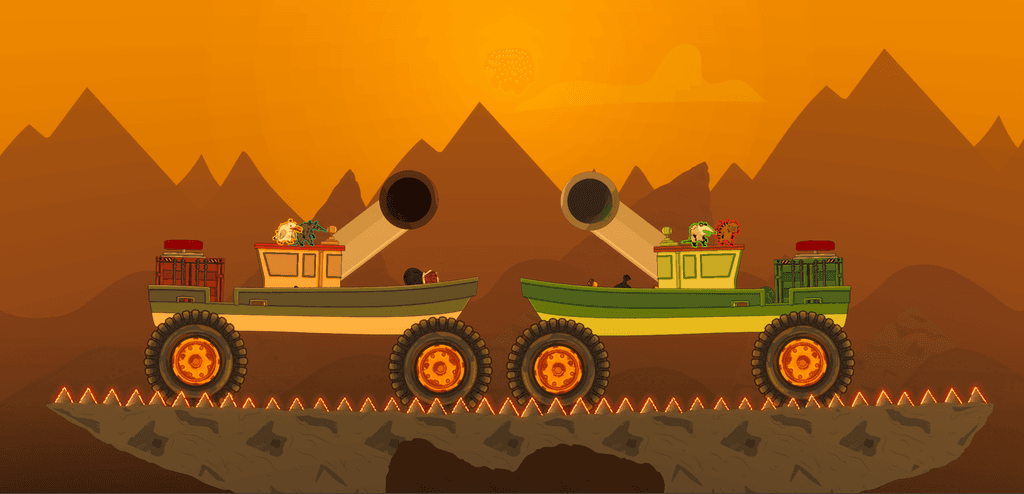
To apply this rule, I started with an appealing concept: for example, monster trucks. I can only create three levels exploring that concept, and each one must have a different difficulty level. I define difficulty by how intuitive the level is and how hard it is to survive in it. I then rate each of the three levels: easy, medium, and hard.
This approach is very effective for introducing new mechanics through simple, tutorial-like levels, then gradually increasing the challenge with more advanced variations. It keeps levels feeling progressively challenging rather than frustrating.
Easy
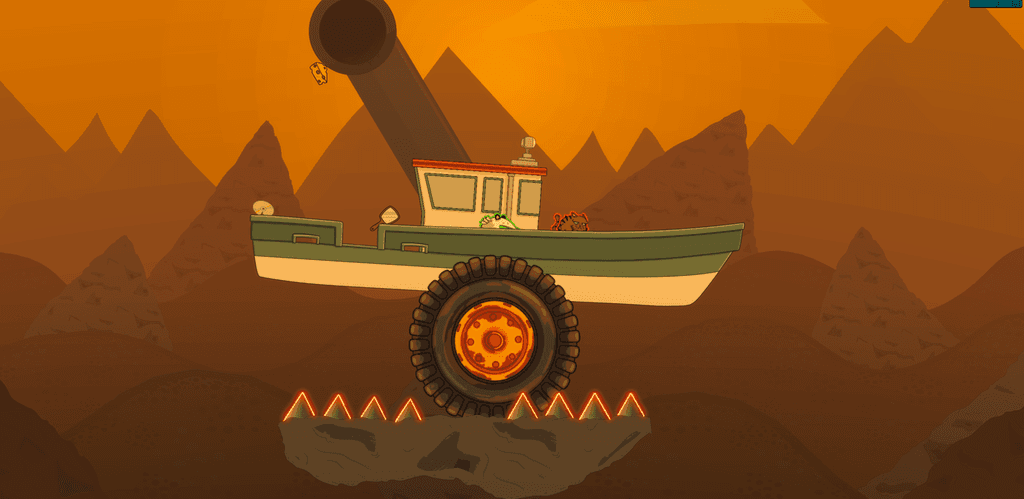
Medium
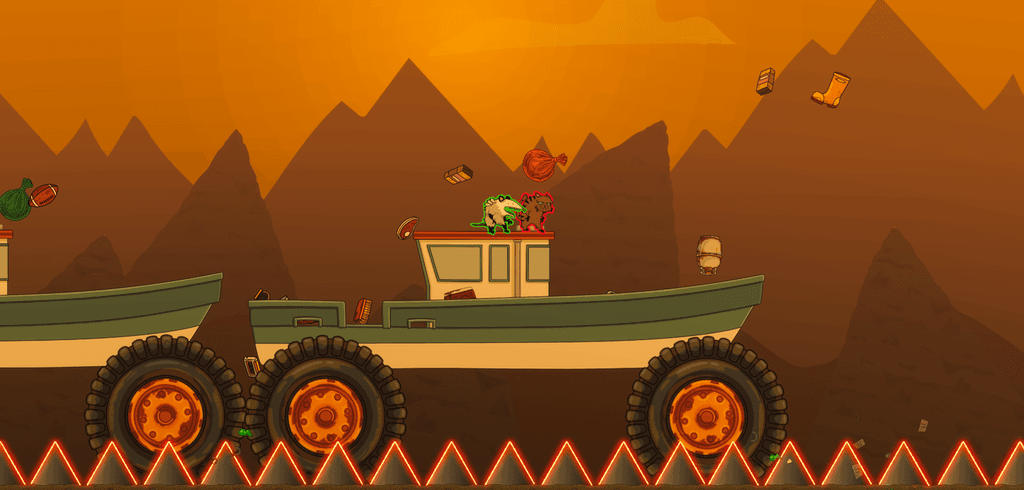
Hard
GAME DESIGN
TRELLO BOARD
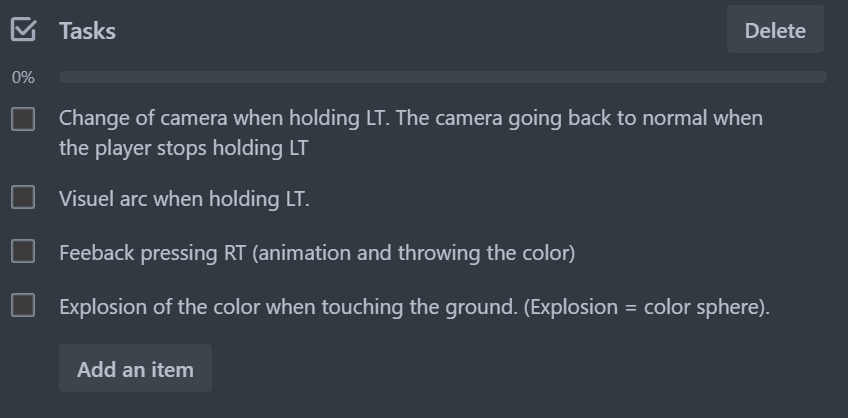
I had to refine every game mechanic and break it down into tasks that detailed the work required to make them happen.
So, to organize and lead my team, I created a Trello page that uses the User Stories structure to separate the work.
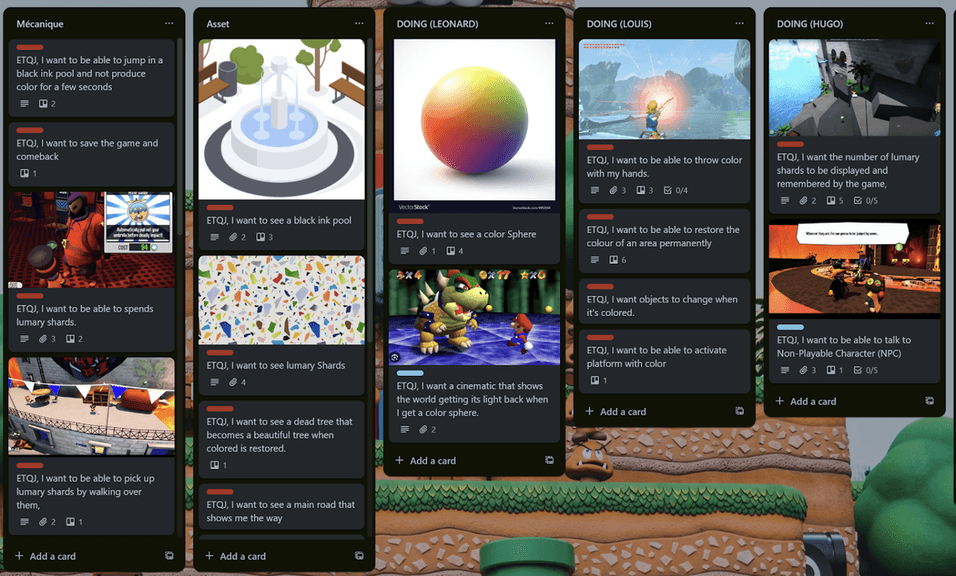
MECHANIC DESIGN & BREAKDOWN
I used tags to prioritize which mechanics were needed first. I detailed each design decision so the team could fully understand their responsibilities and really take ownership of the work. I also provided visual examples to clarify my concepts.
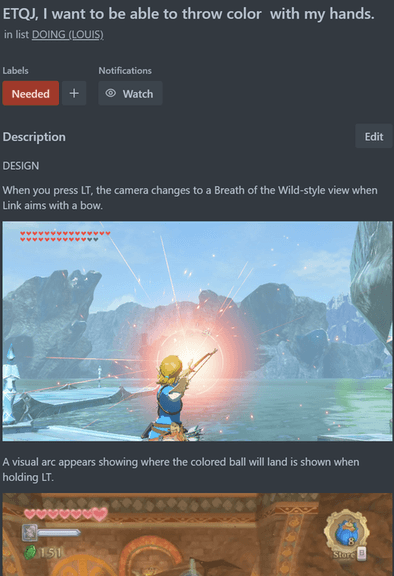
I used 'kid' user stories to help organize the project from the start. This also helped me deconstruct each mechanic into smaller tasks for the programmers and the artists.
Trello Attachments
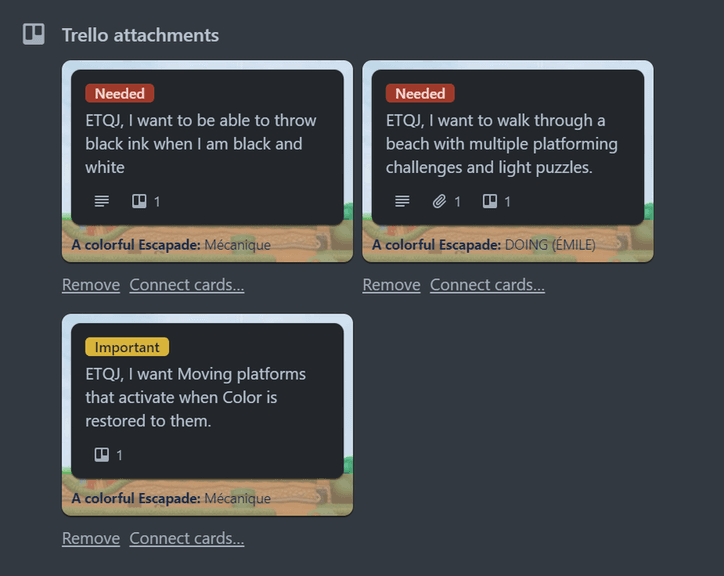
Tasks
FOURTH NIGHT
See the full project →GAME DESIGN
BEGINNING
The player sees the movie for the first time
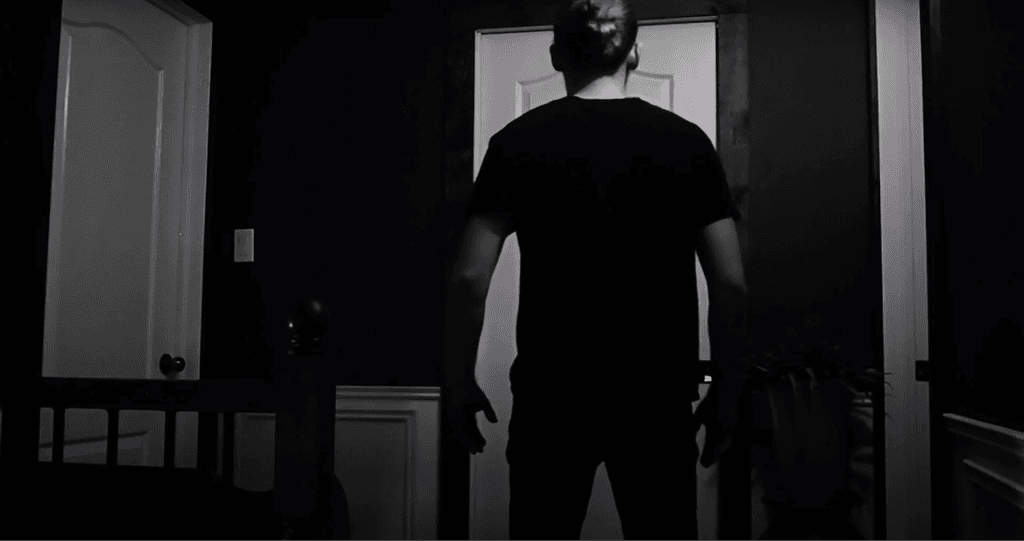
It starts as a movie inspired by the old slashers of the fifties, until the main character is brutally murdered.
THE CURSOR
The apparition of the white dot
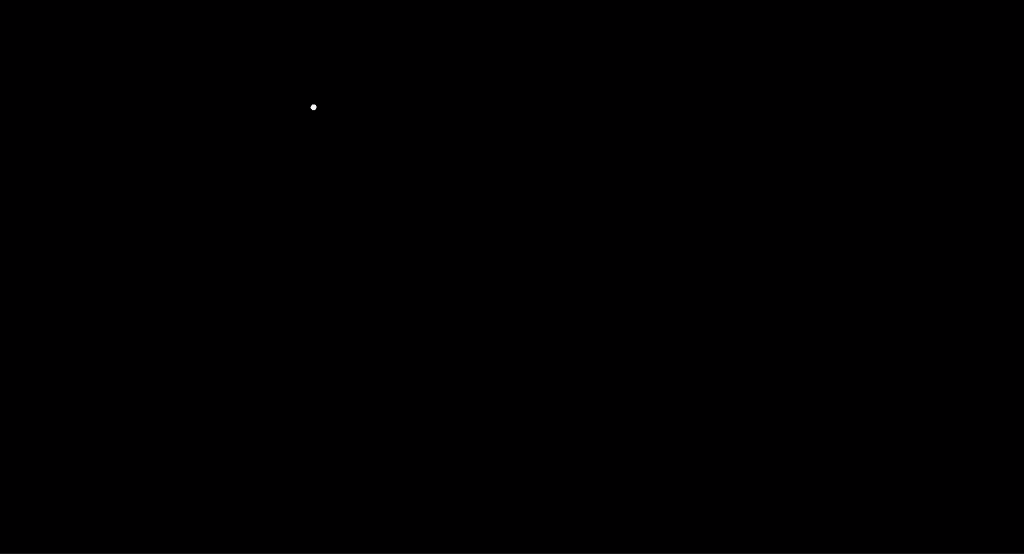
After the main character's death, a cursor appears on the screen. This is the player's cursor, which can guide the main character of the story to new locations that were not explored during the first viewing of the film.
PLAYERS CHOICES
The player clicks on the door, and now the movie changes so that the main character goes into that door.
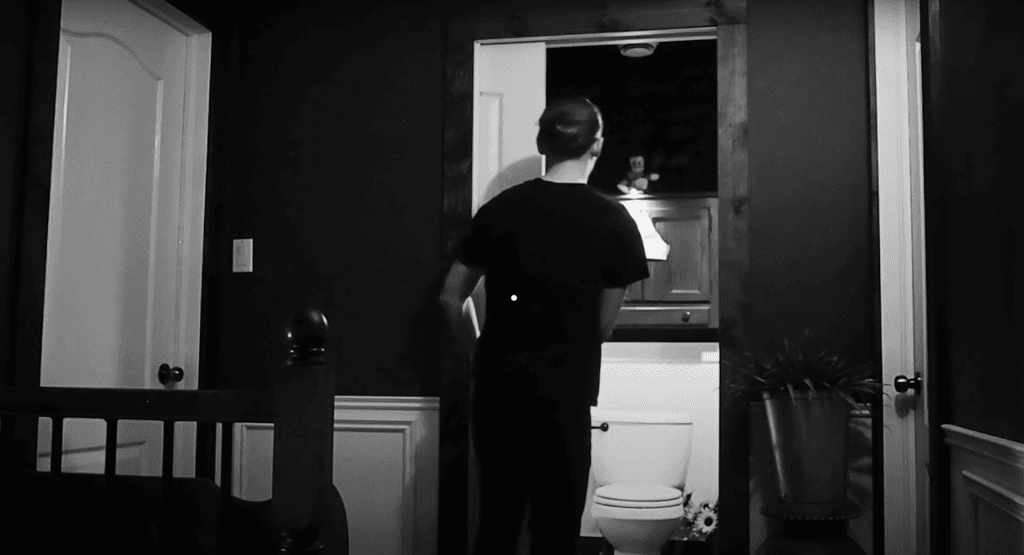
The goal of the game is to hide different paths in the movie screen. So, for example, if the player clicks on an object, the object might fall and attract the character's attention in the movie.
INVENTORY
The player uses the inventory to scare the dog away
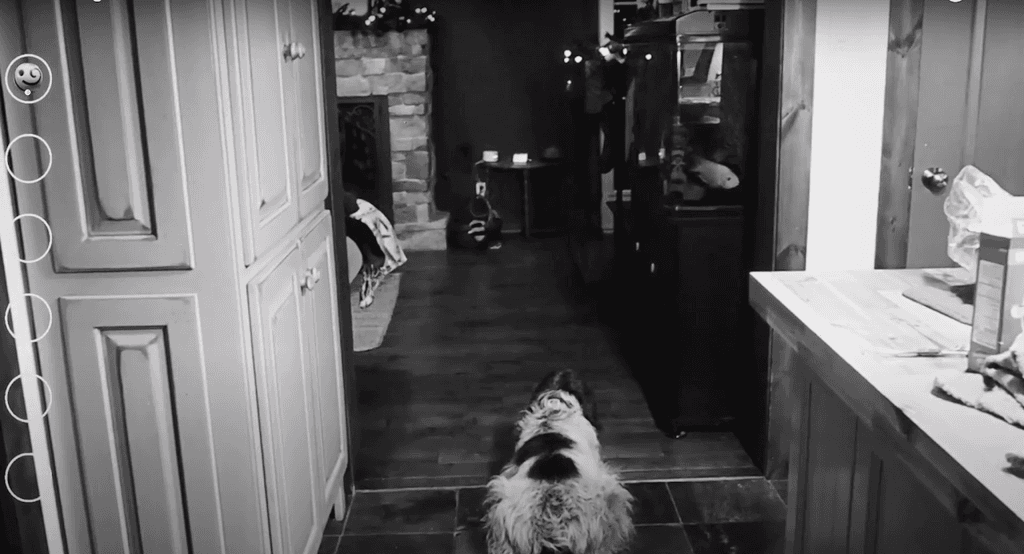
The player also has access to objects that the main character in the movie has picked up. When you use the object, you create a real-time editing glitch and the object appears in the film.
The film restarts every time the main character dies. The player must guide the protagonist to find all the objects that allow them to finally finish the film once and for all.
Miro Board
DESIGN DOCUMENTS
See the full project →
GAME DESIGN
GDD
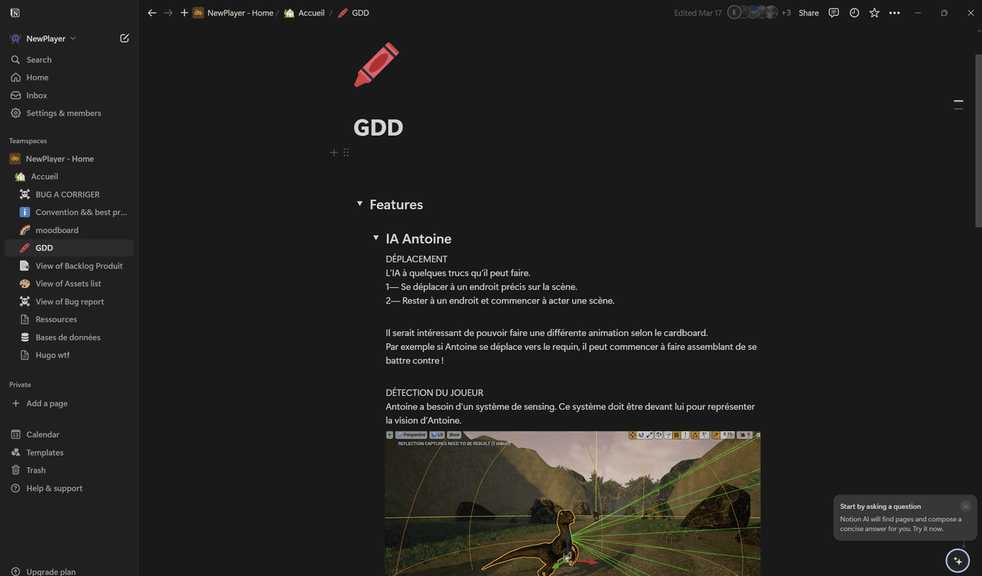
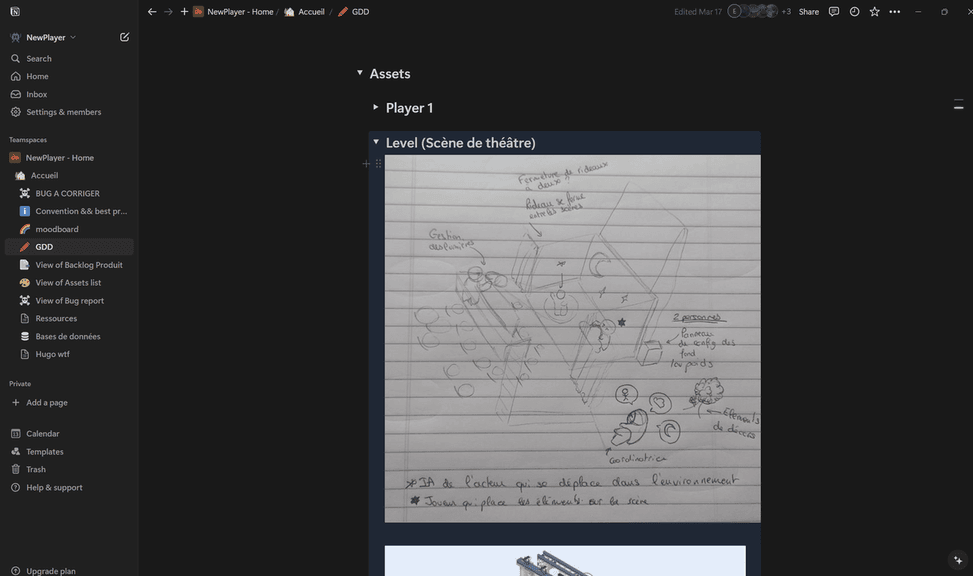
I wrote a GDD (Game Design Document) to keep track of each idea and how we should implement them. I did a section for the programmers and a section for the artists.
I also took care of the Playtests, I made sure that we had feedback to fix bugs and make the game more fun!
ONE PAGERS
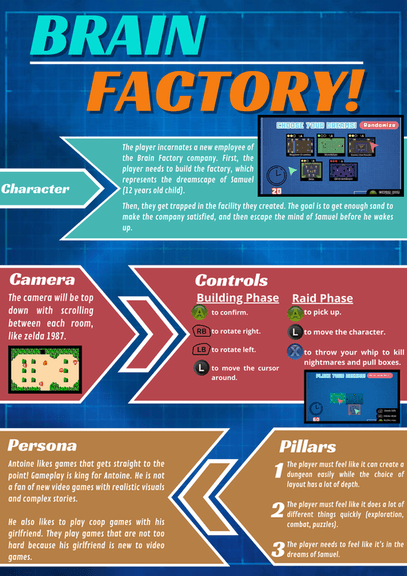
OCR LOOPS
GAME WORKFLOWS
UX & PLAYTESTING
Auto-Grab: an Accessibility Feature
Royal Vermin targets families playing on Nintendo Switch, and accessibility is one of its pillars. Playtests showed that less experienced players struggled with the controls.
My first iteration was a per-player difficulty multiplier, inspired by Ultimate Chicken Horse. It made lopsided matches more exciting, but the controls stayed just as hard. Watching players again, I found the real obstacle: holding a trigger while moving and jumping to grab objects.
My second iteration, Auto-Grab, picks up objects automatically. In family playtests, every tester said it helped them play and 90% enjoyed it. It shipped in the final game as a magnet the character holds, with its own menu icon, animation, VFX and sounds.